Upon completing my
contextual study into the American new wave I believe it was effective at
exploring the new wave conventions present in Midnight Cowboy, The Graduate and
Easy Rider and the influence the American new wave had on the world of film. I
struggled with the task at first as I was unsure how to go about starting it, I
had compiled all of my research onto the blog and had analysed key scenes ready
to start my actual contextual study but I was just unsure of how to go about it
in the best possible way but when I started to write it I had no problem with delving
head first into it. I think I went into great detail about how Mike Nichols,
Dennis Hopper and John Schlesinger had incorporated the ideologies of the
counter culture youth of the time into their films. I probably used my organisation
skills best on this task and actually had plenty of research for me to use when
it cam to writing my own contextual study of the American new wave. The hardest
part of the task was definitely the initial research as it was one of the first
times I had done a task like this off my own back rather than relying on
teachers but after starting to gather some research I realised it was a lot
easier than I thought and I ended up having so much research that I didn’t use
half of it. If I were to redo this task I would definitely use the same films
but I would go into a much deeper analysis of the scenes and perhaps use
different scenes such as the Warhol themed party from Easy Rider. I thoroughly
enjoyed this task and I’m looking forward to do similar tasks in the future. It
has widened my film knowledge and contextual knowledge of 1960’s America. I feel
like I have taken inspiration from the three films I watched within my own new
wave film as I tried to incorporate the use of travel seen in The Graduate and
Midnight Cowboy whilst also incorporating the drug use and eccentricity of Easy
Rider. The Graduate was probably the biggest inspiration I had when it came to
making my own film as my film is essentially an exploration of the mind of a
youth very much in the same position of Benjamin Braddock, unsure of what they
want to do with life and as such take a laissez-faire approach, but at the same
time wanting to do something important with their life, just as Ben says “ I
just want it [his future] to be different” my film is about wanting to make
something of your life but not knowing how to do this just like the disaffected
youth of 1960’s America.
Showing posts with label Unit 1 Contextual Studies for Creative Media Production. Show all posts
Showing posts with label Unit 1 Contextual Studies for Creative Media Production. Show all posts
Thursday, 10 December 2015

The Graduate Scene Analysis
The Graduate Scene Analysis from Jakob Morrison on Vimeo.
This is a brief analysis of the opening scene from Mike Nichols' The Graduate
Wednesday, 9 December 2015
Evaluation
When it came to starting my New Wave film, I wrote up an initial design brief which can be found here http://kechncjakobmorrison.blogspot.co.uk/2015/11/new-wave-brief.html The subject matter didn't particularly matter for my new wave film, it was mainly the locations, so for this I planned ahead and had a look at some places to film in Birmingham and Manchester, my planning for this can be found here http://kechncjakobmorrison.blogspot.co.uk/2015/12/new-wave-planning.html
When deciding what to actually produce as part of my new wave film, my contextual study of the American new wave was a big influence on me especially Easy Rider with it's use of jump cuts and drug use.


The Graduate and Midnight cowboy also inspired me to include transportation within my new wave film as they both use buses to show that the characters are moving on with their lives, because of this I decided to use footage on a bus journey at the start of my film, about half way through and at the very end. I decided these journey's such happen at different times of the day and as such the footage from the start of the film was shot in the morning, the footage from the middle of the film was shot in the afternoon and the footage used at the end of the film was shot at night.
My final piece produced was a statement on the idea that the majority of the youth in today's society is more interested in what they know and not particularly expanding their horizons. The idea from this came about from the general feeling of Benjamin Braddock in The Graduate, he does not know what he wants to do with his future but he doesn't just want to rush into it and as such spends the majority of the film doing absolutely nothing just as the subjects do in my film. The idea behind layering images of art galleries and other established locations over the top of my main footage was to get across the idea that even though the subjects do not particularly want to progress with their lives there is this overwhelming sense that they must do something important with their lives. I felt like art galleries and museums were the perfect locations for this due to the fact they are literally monuments to people's life work. I have also included a few images that are visible for a few frames that include phrases such as 'random movement', 'little things mean a lot' and 'do not open' The idea behind this is that they are passing thoughts of the youth today, or at least myself. The film is very much a reflection of my life and the general feelings felt by the 1960's youth of America, they wanted their future to be different but didn't know how to go about this. The film attempts to depict my outlook on life in that as much as I want myself to be known to the world, symbolised by the art galleries, I am unsure of how to do this, as shown by the words 'random movement' I feel as if anything I do with my life will be a random stab in the dark.
Having done my initial camera and lighting tests I had better knowledge of ISO, aperture and shutter speed, I tried to incorporate this into my new wave film as much as possible but I intended for the majority of my filming to be done with natural lighting and so the majority of the time I only needed to adjust my aperture slightly each time just to make sure the footage produced was neither over or under exposed. The majority of filming done used a hand held camera, this is a common technique used within new wave films and I also felt that it would work well within established locations, it is meant to symbolise the idea that to become a well-known person I would have to take a much more hands on approach. This is opposed by the shots within the bedroom, the majority of the filming here was done by a static camera and I tended to just set up the camera and let it record, this was to symbolise the laissez-faire approach I have to life in general. The editing is jumpy and erratic as early new wave films were but it also has somewhat of a deeper meaning. The film is really a reflection of what's going on in my head, I can never really focus on one thing and my mind is constantly switching between ideas, I constantly worry that I will make nothing of my life but at the same time take no action against this.
Editing for my new wave film was very sporadic and every cut used was a jump cut, the jump cuts enable a quick change of scenery, something the french new wave films were renowned for when they first arrived on the scene. At other times, I used jump cuts to show the same scene but characters in slightly different positions to show that although these people have lives and do activities from time to time, they aren't exactly very exciting and not really worthing of watching, a jump cut was used to fast forward through this group of people's lives. Due to the fact that I filmed a lot of footage for my new wave film when it came to editing I had a lot to sort through so I found sorting them at first into relevant folders as I had captured a lot of video as well as photography really helped.


When filming my main challenge was that I felt I did not film at enough different established locations, I tried to overcome this by getting a lot of filming done at the locations I could visit such as the Manchester Art Gallery and Birmingham Museum and Art Gallery. I ended up having about 3 hours of footage for me to edit together to produce my final piece. this however was another one of the challenges I faced, I ended up filming far too much and didn't allow myself enough time to sift through the hours of footage to find specific shots that I wanted to use. If I was to improve upon my new wave film I would definitely plan my filming a lot better and shoot at more locations as I only used about 6 locations for filming. Also if I organised myself better and had better planning I would have had more time to watch through the footage and select key clips from my footage to use. As with all my work my organisation skills are what let me down and as such if I were to re-do my new wave film I would plan ahead in much more detail and I feel this would have allowed me to produce a much better film.
When deciding what to actually produce as part of my new wave film, my contextual study of the American new wave was a big influence on me especially Easy Rider with it's use of jump cuts and drug use.


The Graduate and Midnight cowboy also inspired me to include transportation within my new wave film as they both use buses to show that the characters are moving on with their lives, because of this I decided to use footage on a bus journey at the start of my film, about half way through and at the very end. I decided these journey's such happen at different times of the day and as such the footage from the start of the film was shot in the morning, the footage from the middle of the film was shot in the afternoon and the footage used at the end of the film was shot at night.
My final piece produced was a statement on the idea that the majority of the youth in today's society is more interested in what they know and not particularly expanding their horizons. The idea from this came about from the general feeling of Benjamin Braddock in The Graduate, he does not know what he wants to do with his future but he doesn't just want to rush into it and as such spends the majority of the film doing absolutely nothing just as the subjects do in my film. The idea behind layering images of art galleries and other established locations over the top of my main footage was to get across the idea that even though the subjects do not particularly want to progress with their lives there is this overwhelming sense that they must do something important with their lives. I felt like art galleries and museums were the perfect locations for this due to the fact they are literally monuments to people's life work. I have also included a few images that are visible for a few frames that include phrases such as 'random movement', 'little things mean a lot' and 'do not open' The idea behind this is that they are passing thoughts of the youth today, or at least myself. The film is very much a reflection of my life and the general feelings felt by the 1960's youth of America, they wanted their future to be different but didn't know how to go about this. The film attempts to depict my outlook on life in that as much as I want myself to be known to the world, symbolised by the art galleries, I am unsure of how to do this, as shown by the words 'random movement' I feel as if anything I do with my life will be a random stab in the dark.
Having done my initial camera and lighting tests I had better knowledge of ISO, aperture and shutter speed, I tried to incorporate this into my new wave film as much as possible but I intended for the majority of my filming to be done with natural lighting and so the majority of the time I only needed to adjust my aperture slightly each time just to make sure the footage produced was neither over or under exposed. The majority of filming done used a hand held camera, this is a common technique used within new wave films and I also felt that it would work well within established locations, it is meant to symbolise the idea that to become a well-known person I would have to take a much more hands on approach. This is opposed by the shots within the bedroom, the majority of the filming here was done by a static camera and I tended to just set up the camera and let it record, this was to symbolise the laissez-faire approach I have to life in general. The editing is jumpy and erratic as early new wave films were but it also has somewhat of a deeper meaning. The film is really a reflection of what's going on in my head, I can never really focus on one thing and my mind is constantly switching between ideas, I constantly worry that I will make nothing of my life but at the same time take no action against this.
Editing for my new wave film was very sporadic and every cut used was a jump cut, the jump cuts enable a quick change of scenery, something the french new wave films were renowned for when they first arrived on the scene. At other times, I used jump cuts to show the same scene but characters in slightly different positions to show that although these people have lives and do activities from time to time, they aren't exactly very exciting and not really worthing of watching, a jump cut was used to fast forward through this group of people's lives. Due to the fact that I filmed a lot of footage for my new wave film when it came to editing I had a lot to sort through so I found sorting them at first into relevant folders as I had captured a lot of video as well as photography really helped.

After sorting through the file types, I then went through my footage and named them small signifier as to what happened in each shot, for example 'Book Band Practice' is footage of two of the people discussing their band and how band practice needs to rebooked, these titles made it far easier to edit my clips as just having a few words describing each shot was all I needed to know what i had filmed.

When filming my main challenge was that I felt I did not film at enough different established locations, I tried to overcome this by getting a lot of filming done at the locations I could visit such as the Manchester Art Gallery and Birmingham Museum and Art Gallery. I ended up having about 3 hours of footage for me to edit together to produce my final piece. this however was another one of the challenges I faced, I ended up filming far too much and didn't allow myself enough time to sift through the hours of footage to find specific shots that I wanted to use. If I was to improve upon my new wave film I would definitely plan my filming a lot better and shoot at more locations as I only used about 6 locations for filming. Also if I organised myself better and had better planning I would have had more time to watch through the footage and select key clips from my footage to use. As with all my work my organisation skills are what let me down and as such if I were to re-do my new wave film I would plan ahead in much more detail and I feel this would have allowed me to produce a much better film.
Planning
For my New Wave film the most important aspect to plan is the locations that I will be using, here are some of the locations that I plan on visiting:
The Manchester Art Gallery and surrounding streets

Birmingham Art Gallery and Victoria Square
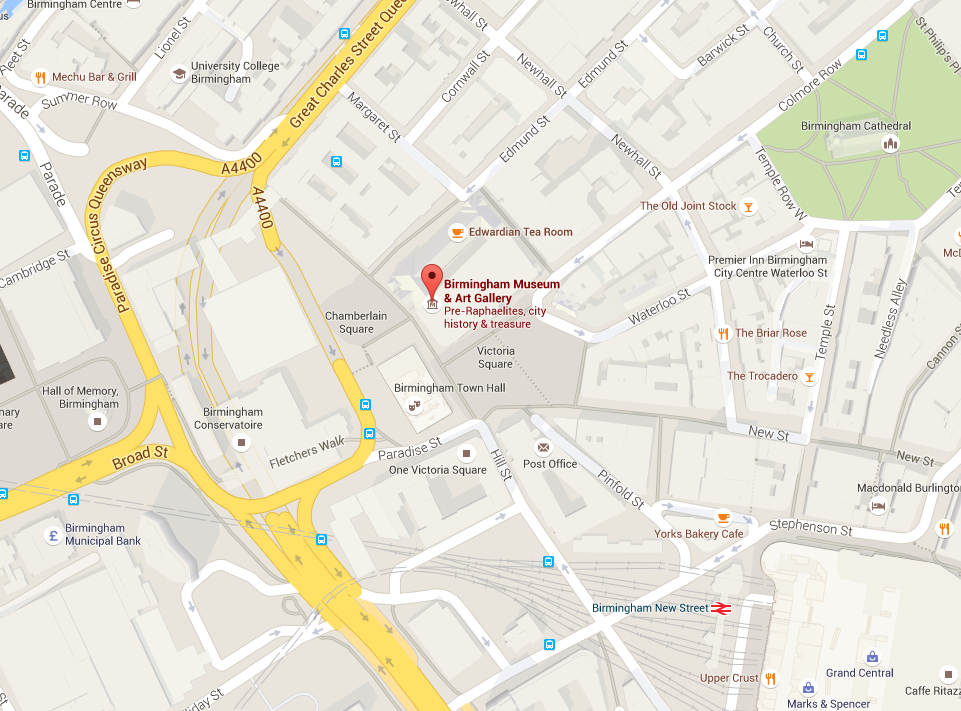
Again I will be filming here as I want to have established locations layered over the top of my other footage, I will also be filming in Victoria Square as the German christmas market is currently being held there, this is quite an established location and so I wish to make use of it whilst I can.
The Custard Factory's surrounding area

I will be filming around The Custard Factory as I have previously visited here and felt like the area's grittiness would work well within my New Wave film as a juxtaposition to established locations like art galleries. The walls are filled with artistic graffiti and I feel like graffiti is one of the key ways of displaying the counter culture movement within today's society.
Whitworth Art Gallery

I will also be filming at the Whitworth Art Gallery as again I feel like this is an established art gallery that will work for layering over the top of my other footage
My bedroom

The majority of filming will be done within my bedroom, this will be my my main footage which will then have other footage from the locations discussed above layered over the top. I will be using two different layouts of the same bedroom to add to the general eccentricity of the film.
UPDATE:
After filming one layout of the bedroom I realised that I did not have much usable footage and so planned to get more filming done using the second layout. This can be clearly seen within my final piece as the majority of action takes place in my bedroom with the second layout.
After visiting Manchester I also realised that the handheld footage would work really well within my film and as such decided to do the same thing when visiting the Birmingham Museum and Art Gallery. I also decided to not get as much filming done in Birmingham because by this point I already had well over 3 hours of footage for me to edit and I didn't have much time left, this was down to my organisation skills, or lack of. I decided that it would be best to get a bit of filming done here but only about half an hour as I already had plenty of footage from both Whitworth Art Gallery and Manchester Art Gallery and the location itself was not important but merely the concept behind becoming established and having a living monument long after you are gone.
After filming about half of my overall footage I realised that I had planned to get far too much and the footage I had already captured would be enough to produce a new wave film like I had intended and so decided that any filming I did from then on would be a lot more particular than before so I would not have as much to edit. My main problem was that I had not planned much when I started as I felt there was not much planning to do but having started filming without planning I found that I had so much footage that would not particularly be of any use to me. This was when I decided that I would be much more particular with what I shot and so decided that I wanted to visit the area surrounding The Custard Factory for it's grittiness and graffiti. I also planned certain shots within my bedroom mainly the different angles used, I intended to just use static camera shots for within my bedroom but then decided to incorporate some handheld footage as it worked so well within the art galleries and other locations. I also decided that I would use different angles rather than just an eye level angle so decided to incorporate some canted angles as well as high angles.
Thursday, 3 December 2015
Wednesday, 11 November 2015
Design Brief
Having researched new waves and analysing three American new wave films it is clear that they share a common theme in that they are about the rejection of everything that came before, whether that be with social issues or actual filming techniques. I specifically looked at the American new wave and found that they spoke strongly about social issues like the Vietnam war and equal rights, the youth were known for there counterculture attitude, listening to psychedelic rock and taking drugs.
I plan to film at established location such as museums, shopping centres and galleries, as well as in a bedroom. I will be using natural lighting for all my footage as I want my audience to be very much aware that they are watching a film. The main action will be the shots from the bedroom, with footage from established locations layered over the top with a low opacity, so it can be seen but only a little.
I plan to intercut all of the scenes randomly with each other to make the film void of any strict narrative, I will be using jump cuts to create jarring transpositions, this will also make the audience more aware that they are watching film. The main sound used within the film will be the non-diegetic backing music, I will also be using little bits of diegetic sound, just a few lines hear and there, these will be recorded using the camera's microphone and so will be bad quality but I feel like this supports my aim of wanting the audience to be aware they are watching a film. I also want my subject to be very much aware they are being recorded, there is no problem with my subjects looking at the camera whenever they feel like it and direct references like waving at or talking to the camera.
I plan to film at established location such as museums, shopping centres and galleries, as well as in a bedroom. I will be using natural lighting for all my footage as I want my audience to be very much aware that they are watching a film. The main action will be the shots from the bedroom, with footage from established locations layered over the top with a low opacity, so it can be seen but only a little.
I plan to intercut all of the scenes randomly with each other to make the film void of any strict narrative, I will be using jump cuts to create jarring transpositions, this will also make the audience more aware that they are watching film. The main sound used within the film will be the non-diegetic backing music, I will also be using little bits of diegetic sound, just a few lines hear and there, these will be recorded using the camera's microphone and so will be bad quality but I feel like this supports my aim of wanting the audience to be aware they are watching a film. I also want my subject to be very much aware they are being recorded, there is no problem with my subjects looking at the camera whenever they feel like it and direct references like waving at or talking to the camera.
Friday, 23 October 2015
The American New Wave
In my exploration of the American new wave, I will be looking in particular at the first few years of this movement and the social and political contexts that are echoed in this time. I will be studying The Graduate, 1967 [1] Midnight Cowboy,1969 [2] and Easy Rider, 1969. [3] The American New Wave, sometimes referred to as New Hollywood refers to the time from the late 1960s to the early 1980's when a new generation of film makers in the United States influenced the type of films produced, their production and marketing the way studios approached film making.
The 1960s is a crossroad in the whole of American history. The counterculture youth had became identified by the idea that they rejected the conventional social norms and cultural standards of their parents and the 1950s as a whole. This was especially in respect to racial segregation and the initial widespread support for the Vietnam War. [8] (Hirsch, Eric D. 1993) Many young people also feared that the nuclear arms race coupled with America's involvement in Vietnam would lead to a nuclear holocaust. [9] Widespread tensions developed in society between generations regarding sexual liberation, women's rights, race relations, traditional roles of authority and of course a materialist interpretation of the American dream. Thanks to a widespread economic prosperity, the white middle class youth, the bulk of the western counterculture, had far more time to turn their attention to social issues. [10] (Krugman, Paul. 2007)
Mike Nichols' The Graduate, released in 1967, follows the story of 21-year-old Benjamin Braddock, who has recently graduated from college but has no aim in life, much to the annoyance of his parents. Ben is seduced by an older woman, Mrs. Robinson, but then proceeds to fall in love with her daughter Elaine. Benjamin, a confused and innocent youth, is exploited, misdirected, seduced and betrayed by a corrupt, decadent and discredited older generation, a perfect metaphor for how the disaffected youth felt at the time. The film perfectly captures the spirit of the time and reflects the confusion and helplessness of the American young people in the 1960s. Instead of just being a comedy, the graduate plays an essential role in reflecting and promoting the culture and ideology of the 1960s America. It shows more sympathy than satire to the young generation at that time. There was already a growing dissatisfaction with the status quo and middle-class values and The Graduate mirrored that anarchic mood perfectly for America's youth of the 1960's during the escalation of the Vietnam War. Benjamin is the epitome of how aimless and unenthusiastic the young disaffected youth of America was or at least would become as they approached middle age and worked in sterile corporate settings.
The Graduate begins with a close-up on Ben's face, showing his void, loneliness and helplessness, at first it appears he is alone until the camera zooms out to reveal that he is on an airplane surrounded by bored, sleeping, expressionless people, and importantly, Ben blends in. The following shot is Ben standing expressionless on a moving walkway; he is about to return home to a world full of superficial people and this shot represents it visually. Ben is being propelled towards his future as if just another cog in the wheel but he is unsure if this is what he wants for himself. This shot lasts for over a minute and allows for a careful observation of the protagonist, which leads to the interpretation that Ben is in a daze. Ben seems almost out of place, he seems unhappy and out of his element as he moves forward. The important thing to remember is that Ben is the visual representation of the disaffected youth of the 1960’s; we as the audience are made to think critically about who Ben is. Not only does this slow pace allow the audience to think about the protagonist, with the help of Simon and Garfunkel's relaxing score, the audience is put in a somewhat sedated state of mind, specifically how Ben feels throughout the majority of the film. Sound of Silence is essentially the theme song of the film and expresses a stuck and hollow feeling, which is inherently the keynote of the whole film. Nichols quickly introduces us to the major thematic premise of the film, as Ben's bag travels down the baggage claim it passes a sign that says, "Do they match?" The film is about Ben feeling as if he does not fit in with superficial world that he lives in. The narrative follows Ben as he tries to find where he fits in, where he feels comfortable, where he matches. This reflects the general attitude from the youth of the time, they were unsure of how they were supposed to fit into a society that they didn't agree with.
The film is largely silent when it comes to actual social issues the counterculture youth cared about but does a good job of using subtly to demonstrate some of the issues. For example, one scene of the film shows Ben sitting in the campus of Berkeley whilst the American flag waves high above his head. This is an important image because Berkeley was one of the most active campuses during the anti-war movement in the 1960s. [11] (Gales, Kathleen E. 1966) It was world-famous due to the strike against the Vietnam War organised by the students at the time and the Free Speech Movement in 1964. [12] The anti-war movement was key in showing the youth's sense of social responsibility and their desire for a better world. Hippies were also a good illustration of the youth culture at that time, as they had become the largest countercultural group in the United States. Hippies were against the mainstream reacted to the difficult times by dropping out of society. [13] (Yablonsky, Lewis. 1968) There is one scene in the film that perfectly captures the hippy movement. Whilst Ben and Elaine are talking in the car, there are some hippies playing rock music beside their car. When Ben asks for them to turn the music down they respond by turning it up, their reaction shows the idea of counterculture and disapproval by the social mainstream. Being a strong symbol for the 1960s disaffected youth culture; hippies are remembered for their fancy clothes, psychedelic rock and deviant behaviour like taking drugs. [14] (Pendergast, Sara. 2004) Sexual revolution and women's rights were also part of the counterculture movement and it is shown in the film by the character of Mrs. Robinson and specifically her seductive behaviour. This new culture of 'free love' encouraged millions to accept that sex was a natural part of everyday life. [15] (Allyn, David. 2000) The affair between Ben and Mrs. Robinson also shows Ben's loneliness and helplessness, an emotion shared by many of the youth of the 1960s.
At the start of the film, Ben and his father have a conversation about what is troubling Ben, he is hesitant in answering but declares that he just wants his future to be different. Behind them is a fish tank; this image of Ben being underwater becomes almost a motif of the film, implying that he drowning a world that he doesn't agree with. The combination of the fish tank behind Ben with Ben declaring his need for a different future establishes Ben’s dramatic need. Being they keynote of the film, this hollow feeling lasts till the end of the film. At the end of the end of the film when Ben and Elaine are making their getaway on the bus, their facial expressions are quite calm compare to how ecstatic they were before they boarded the bus. They may have escaped their families and finally been able to make their own decisions but that's useless if they don't know what to do next. This kind of hollow feeling shows exactly the ideology of the disaffected youth of 1960s America. Unlike the older generation who had a strong idea of the 'American dream', the youth of the 1960s had not experienced the hardship caused by war. [16] (Roszak, Theodore. 1968) The older generation hoped the young people would cherish their peaceful life and to continue fighting for the 'American dream' but the younger generation did not understand why and as such starting disagreeing with social situations. The conversation between Ben and his father shows the difference in the sense of value between the two generations, which further reflects the attitude of the young people towards the value of tradition, Ben doesn't know what he wants to do but he at least wants it to be different. The two different values had conflicted with each other for several years, and by the late 1960s there was a strong dissatisfaction of the current social situation among the young people. With the outbreak of the Vietnam War, both the counterculture movement and anti-war movement culminated in around 1967 and The Graduate exactly shows the idea of counterculture of the time.
John Schlesinger's Midnight Cowboy, released in 1969, follows Joe Buck, a handsome texan dishwasher, and his move to New York. Here he hopes to make easy money as a prostitute for what he percieves as a rich middle-aged class of bored women. he finds that New York is a lot tougher than he thought and his hunting is unsuccessful. He meets a crippled street con man, Ratso, who eventually seems to have a heart of gold, and the two bond over surviving with very little money. They struggle as Joe's clients offer little money and Ratso's health diminishes. Everything seems positive as Joe get's some work but he returns to find Ratso's health has worsened and what follows is a heartfelt attempt to get Ratso to Miami.
Joe Buck's story is an old one, with it's roots in the American dream but Midnight Cowboy has an anti-American dream narrative that seeks to show America's underbelly, the greasy, dark and starving lifestyle that so strongly juxtaposes the ideal American dream. Joe Buck is entirely American, a bright eyed, handsome youth with dreams of making it big in the city, all while refusing to remove his American costume, his cowboy attire. Joe has an almost romantic fascination with the cowboy life just like the American media does, despite westerns rarely depicting what the life of a cowboy is actually like, the films have become a symbol of an ideal American ambition, with actors like John Wayne enforcing this ideal. Therefore it is appropriate when Ratso tells Joe he will be perceived as a homosexual prostitute by clients on the street if he does not lose the cowboy clothes. Joe refuses to believe that his ideal image of the American man is a sign of homosexuality in New York City and challenges Ratso, "John Wayne, you're gonna tell me he's a fag?" he cries, almost in tears. The depiction of homosexuality must be read at face value, Joe sees homosexuality tarnishing the American cowboy image, which in reality was merely a fictitious, romantic and naive version of the truth. In westerns, cowboys are shown to be tough, hardworking and above all, a symbol of justice and the American way, but the hero cowboy is a Hollywood lie and Joe Buck never realised this.
When on the bus to New York, he listens to his radio and when the he knows he has arrived when the radio picks up a New York City station. It is the radio that leads Joe Buck when he doesn’t have a friend in the world. Joe’s obsession with his radio embodies America’s own fascination with media, be it a moral or immoral one. the film revolves around joe's need of money, and another of it's motifs is the Mutual of New York Building, which flash MONY in the night sky. Commercialism and bright lights line the streets of New York, and each street seems to be hiding gold, but New York is not the city Joe thought it would be. In one poignant scene, Joe sleeps with a woman in a penthouse with the hopes she'll pay him and while they're in bed the TV changes channel at a fas pace, showing a large number of adverts as well as other pointless programmes. This scene mixes together advertising with sex, money and lust, to create an unreadable and unreal situation that is, uncomfortable to watch and for Joe, unrewarding. In one poignant scene, Joe sleeps with a woman in a penthouse in the hopes that she will pay him, and while they’re in bed, the tv flips through channels at a schizophrenic pace, showing an absurd number of advertisements and other inane programming. This scene mixes together commercials with sex, money and lust, mixes them into an unreadable, unreal situation that is nauseating, confusing, and, for Joe, unrewarding. While the scene may seem a bit too precise for contemporary viewers, it holds the film’s thesis, that Joe’s naive ambitions and his ideal America are just that, naive, and that he will not earn money, no matter how many bus trips he takes.
Midnight Cowboy is a film that begins on a bus, and ends on a bus. The American cannot sit still, he must constantly travel, gaining experience, in order to 'make it big' as it were. The film embodies the notion of leaving the country for the big city and if anything is an education against it, a wary tale for starry-eyed kids. In another Dustin Hoffman film, The Graduate, Hoffman's character escapes on a bus with the girl he claims to love. that film too dispels an American myth and Midnight Cowboy can almost be read as a sequel, about what happens when Hoffman gets off the bus and back into the gritty world. Midnight Cowboy's title brings to mind the essential American narrative, the western, but it is no such thing. The film attempt to portray the truth, in as honest way as possible, of life on the streets of Times Square. It's thematic premise may not be as striking today as it it was when first released, and sometimes it feels particularly dated. If nothing else, the film succeeds in it's portrayal of the friendship of Joe and Ratso, two outcasts try make a living. While initially rocky, their friendship blooms into an married couple-esque relationship, and in the end, each truly cares about each other. Against the sex and ads and MONY sign, Joe and ratio's relationship is the only real thing in the whole film. The film dispels the American dream in favour of the American people, the counterculture youth didn't follow this American dream their parents had believed in but instead each had their own dream, this film very much promotes this but just like The Graduate it shows the hopelessness of the people as they each achieve their own American dream.
Dennis Hopper's Easy Rider tells the story of two bikers, Captain America and Billy, who travel through the American southwest as they look for America but can't seem to find it anywhere. Easy rider explores the social issues and tensions in 1960s America, such as the rise and fall of the hippie movement, communal lifestyle and drug use. The film presents something fairly alien in cinema, two characters attempting to escape from a country they never asked for, in any way that they can. A landmark counter culture film, it defies as many conventions of America cinema as it does conventions of American social life. By changing the conventional road movie narrative, incorporating modern folk/rock music as non-diegetic sound and using shocking imagery, both socially and in terms of editing style, Easy Rider stands as a testament to the changes going on in 1960's America.
As much as Easy rider seems to follow the traditional road movie, it does not. It seems as though the Captain and Billy are attempting an exodus from normal life but it could be argued that they have long dropped out of the 'normal' way of living and are merely trying to complete the final phase of their journey, implied by Billy when he speaks of retiring to Florida. It seems as though the Captain has a realisation of sorts after taking LSD in New Orleans graveyard and as such has a subtle change of identity, but this is never stated explicitly, only implied in the captains despondent demeanour after the Mardi Gras festival when he tells Billy "we blew it". When the conventions of the road movie are used very sparingly, it becomes very difficult to argue that Easy Rider is following typical narrative conventions. Another instance of violating narrative conventions are a little mote subtle, but even more meaningful in establishing Easy Rider is what is is. The narrative structure of Easy Rider is set up so that as the film progresses and the two drifters ride further from the Pacific, their interactions with everyone from George the lawyer to local townsfolk begin "casting judgement on American society's failure to live up to it's ideals." [17] (Cummings, William. 2005) Easy Rider is a movie about being a stranger in your own country, the land they live on doesn't really belong to them anymore. When the Captain and Billy travel from West to East, the opposite of traditional road movies, it is because they have nothing left to gain from the old America. The Manifest Destiny [18] (Miller, Robert J. 2006) has run its course, the atomic bombs could fall at any minute and none of the old fashioned patriotism seems to mean anything anymore. The characters show a sense of this when the bikers are in the desert and the hippie hitchhiker says that "the people this place belongs to are buried under here." Perhaps the Captain and Billy feel like that in travelling back to the East they are, somehow, giving back the land that may not have been theirs in the first place.
There are many scenes in Easy Rider that transgress acceptable American film imagery, it is important to note that these visual 'social sins' are ones which can be taken out of narrative contact and still hold meaning as standalone images. There has always been a rule in mainstream cinema that drugs should either be detrimental to a character's life or to signify the deviant behaviour of a character, neither of these things are true about the Captain or Billy. Their use of drugs is portrayed sympathetically throughout the film, marijuana in particular being shown as nothing more than a means of evening relaxation, to add to the controversial nature of drug use in Easy Rider, it is worth mentioning that all illegal drugs used in the making of the film were in fact real. [19] Although the drug use of the bikers is meant to separate them from mainstream society and as such mainstream protagonists, all it really serves to do is highlight their sense of disappointment with the American dream. As Billy and the Captain wander through New Orleans during an acid trip, we do not see images of decadence or deviance, but those of fear and loathing. This all occurs after the death of George, a man with such deep concerns for the state of his country, who could actually see past the bright colors, through the pot haze and understand that this new generation was restless for a reason. A man like George, with his eloquent speech and unique outlook on America, could have been the salvation of his country; instead, he is killed by the members of what he referred to many times as the “antiquated hierarchy” that exists in the U.S.
Even the use of non-diegetic sound in Easy Rider shows a disassociation from the old America, in terms of cinematic conventions. The film has always been noted for it's use of popular music of the day like Jimi Hendrix and The Byrds, instead of typical methods of soundtracking like an orchestra. There is importance to be found in the use of rock and folk music for the soundtrack. (Biskind, Peter. 1998) It helps to establish the counterculture which the Captain and Billy are supposed members of, not as a hollow extension of American society but as a living subculture, complete with its own attitudes, modes of living and music. At times, the music even has direct meaning, as the two vagabond riders move through the desert, 'The Weight' by The Band plays in the background. This is a song ironically juxtaposed to the situation of the Captain and Billy. The song follows a man who carries a burden because he has a definite place to go and do something specific, whereas our travellers carry a weight on their shoulders because they have no where to go and nothing to do. They are part of a counterculture which feels disregarded by establishment for possessing 'radical' views on the Vietnam War, use of drugs, styles of dress and has chosen to wander until a place can be found which accepts them. They are "Born to Be Wild", they will not be able to "Take a Load Off" within the realm of mainstream society.
The films closing scene is also very visually startling, in addition to it being narratively curious. Almost without warning and within only two minutes of screen time, both Billy and the Captain are shot down on the road by a shotgun-wielding man in a truck.After Billy is shot, the Captain circles back aid his dying friend. Right before he leaves to get help, the Captain removes his jacket and covers Billy with it, leaving an image of the American flag lying face-up on his body. This moment, in which the flag which is supposed to be protecting the hippie motorcyclist is the same flag which the man in the truck uses to justify his hatred, is rife with irony. Even though the American flag looks the same to both men, there is a great difference in opinion over what it really stands for. On one side is exceptionalism and the American dream; on the other is the death of that dream, where progress is no longer an “unalterable destiny with our civilization as the essence” [21] (Nisbet, Robert. 1961)
Dennis Hopper’s Easy Rider was the filmic signifier for a new ideological structure that began to congeal in 1960s America, a mode of thought that would be met with resistance by the establishment. It was also the sign, along with movies like Bonnie and Clyde and The Graduate, for a new era in American moviemaking. An era not about perpetuating the outdated ideals of a nation through the medium of film, or upholding the status quo through conventional techniques . With a little bit of hand-wringing over who is ‘really right’, Easy Rider took the position that Tocqueville’s assessment had fallen short in the second half of the twentieth century. It showed not a seedy underbelly of America, but a frustrated ‘other half’ expressing itself though an unconventional narrative, soundtrack and visual composition. Through the antics of Billy and the Captain we can see what happens to the American dream deferred, first it dries, like a raisin in the sun, then it explodes.
The American New Wave was very influential for the decades of American and world cinema that followed was rife with work that rejected cinema before it. Films no longer need a typical narrative structure, they can reject typical conventions of film because it has already been done and people identified with it. New wave films were incredibly popular amongst the younger generation, this is important because this was the future generation of film makers, the youth of the world realised that they did not have to live a life that was put in place by some sort of establishment, they could pursue their own dreams much like Benjamin Braddock, Joe Buck, Captain America and Billy intended to do. They cannot beat society but that does not mean they can crete their own, counterculture is very much live in both film and society today, almost to the extent that some would argue counterculture is the new culture. The movement of the 1960s American disaffected youth stood as an example for the world to follow if you don't agree with something then don't do it. Do not let someone else run your own life, in a world where we have so little real choice to make, make your own choices when you can and remember that the life you lead is only as real as you make it.
[2] Midnight Cowboy. 1969. [DVD] John Schlesinger. United States. United Artists.
[3] Easy Rider. 1969. [DVD] Dennis Hopper. United States. Columbia Pictures.
[4] King, Geoff. 2002. New Hollywood Cinema: An Introduction. London. I.B. Taurus.
[5] James, David E. 1989. Allegories of Cinema, American Film in the Sixties. New York. Princeton University Press.
[6] Lewis, John. 1998. The New American Cinema. New York. Duke University Press.
[7] Collins, Jim. Radner, Hilary. Preacher Collins, Ava. 1993. Film Theory Goes to the Movies. New York. Routledge.
[8] Hirsch, Eric D. 1993. The Dictionary of Cultural Literacy. Houghton Mifflin Harcourt.
[9] Rockin' At the Red Dog: The Dawn of Psychedelic Rock. 2005. [DVD] Mary Works.
Monterey Video/Sunset Home Visual Entertainment.
[10] Krugman, Paul. 2007. The Conscience of a Liberal. W. W. Norton & Company, Inc.
[11] Gales, Kathleen E. 1966. A Campus Revolution. The British Journal of Sociology. 17.
[12] Berkeley in the Sixties. 1990. [DVD] Mark Kitchell. California Newsreel First Run Features.
[13] Yablonsky, Lewis. 1968. The Hippie Trip. New York. Western Publishing Inc.
[14] Pendergast, Sara. 2004. Fashion, Costume and Culture: Clothing, Headwear, Body Decorations and Footwear Through the Ages. Detroit: UXL
[15] Allyn, David. 2000. Make Love, Not War: The Sexual Revolution: An Unfettered History. Routledge.
[16] Roszak, Theodore. 1968. The Making of a Counter Culture. University of California.
[17] Cummings, William. 2005. Easy Rider and American Empire: A Postcolonial Interpretation.
[18] Miller, Robert J. 2006. Native America, Discovered and Conquered: Thomas Jefferson, Lewis & Clark and Manifest Destiny. Greenwood.
[19] Easy Rider: Shaking The Cage. 1999 [DVD] Charles Kiselyak. United States. Columbia TriStar Home Video
[20] Biskind, Peter. 1998. Easy Riders, Raging Bulls. New York. Simon and Schuster.
[21] Nisbet, Robert. 1961. Foreign Policy and the American Mind.


Subscribe to:
Posts (Atom)